
"coffee bean export"
20000 article(s) found
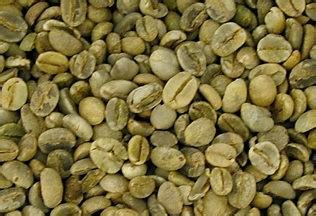
Which countries are mainly exported to the graded production areas of Ethiopian coffee beans
Coffee is Ethiopia's most important export cash crop and the main source of Ethiopia's foreign exchange earnings. Ethiopia's coffee exports account for about 3% of the world market, making it the eighth largest coffee exporter in the world. Coffee exports increased steadily from 58000 tons in 1990 to 110000 tons in 1995-1996 and remained at this level in the following years. 2001-2002
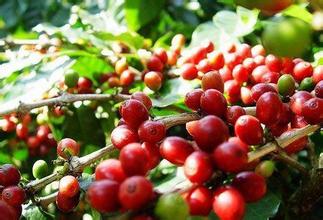
Boutique Coffee beans: introduction to Ethiopian Coffee Industry and Coffee Import and Export
Ethiopia is one of the major producers of Arabica coffee in Africa, producing the best Arabian coffee in the world. It is said that coffee was first discovered by shepherds in Essekafa, and the name of coffee evolved from Kafa, so Essex is still the hometown of coffee. The geographical environment of coffee production and processing is very suitable for coffee growth. Coffee is mainly cultivated.
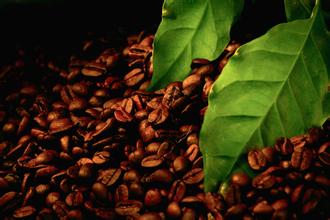
Ethiopian Coffee Flavor description Grinding degree Taste characteristics introduction of fine coffee beans
Washed coffee accounts for 35% of exports. Good quality washed coffee is processed with freshly picked fully ripe fruit, picked carefully and closely monitored by professionals. The picked clean coffee beans are pulped on the day of picking, then fermented, washed, dried and peeled. The humidity of processed coffee beans is kept at about 12%. Sun-cured coffee accounts for 65% of exports. Mainly by

Recommendation of boutique coffee manor; detailed analysis and introduction of coffee beans in Ethiopia (mocha)
Ethiopia's coffee exports account for about 3% of the world market and are the world's eighth largest coffee exporter. Coffee exports increased steadily from 58000 tons in 1990-91 to 110000 tons in 1995-96 and remained at this level in the following years. The export volume exceeded 110000 tons in 2001-2002 and reached 127000 in 2002-2003.

A brief introduction to the method of raw bean treatment in the growing environment of coffee beans in El Salvador
The market for Salvadoran coffee: the best Salvadoran coffee is exported from January to March, and 35% of the extra hard beans are exported to Germany. In 1990, the Government of El Salvador privatized part of the coffee export industry, hoping to increase the income rate of coffee in the export market. El Salvador is one of the small countries in Central America with a very dense population. People here love coffee. Salva

In the first quarter of 2019, Indonesia's coffee export exceeded 22.86 million US dollars. Is Aceh coffee good?
Professional coffee knowledge exchange more coffee bean information Please follow the coffee workshop (Wechat official account cafe_style) in the first quarter of 2019, coffee exports from the plateau production in central Aceh exceeded 311.04%, totaling US $22.86 million, a sharp increase over the same period in 2018. Wahyudin, director of the Central Bureau of Statistics (BPS) of Aceh, told reporters in Wanda Aceh: today

A brief introduction to the Market Price of Fine Coffee Bean varieties in Renas Manor of El Salvador with balanced taste
Today, this coffee accounts for 40% of the country's exports. The best quality coffee is exported from January to March, and 35% of the extra hard beans are exported to El Salvador, Germany. Salvadoran coffee refers to coffee produced in the small South American country of El Salvador, which is light, aromatic, pure, slightly sour and characterized by excellent balance of flavor. It is a specialty of Central America. With sour, bitter, sweet and other taste characteristics, the best baking degree

The general situation and prospect of Vietnam's coffee industry on the basis of ranking second in output and export volume in the world.
The overall goal is: on the basis of ranking second in output and export volume in the world, Viet Nam will double its export and output value, change its growth mode, improve its competitiveness and added value in the direction of modernization and diversification, and steadily achieve economic, social and environmental benefits. The 2020 target is to control the total area of coffee cultivation at 600000 hectares, with a unit yield of 2.7t / ha, with a total output of 2.7t / ha.

Indonesia's coffee bean exports will drop sharply to a two-year low, domestic demand will increase and rainfall will affect the harvest.
The number of coffee beans exported from Indonesia will fall sharply to its lowest level in two years, mainly due to increased purchases by domestic coffee bean processors and falling harvests due to rain. According to the median estimate of seven coffee exporters and one processor surveyed by Bloomberg, the country's coffee bean exports may be 14.385 million metric tons (6.42 million bags) lower than a year ago. India

Ethiopian Coffee Flavor Flavor Manor introduces Ethiopian Coffee varieties
Washed coffee accounts for 35% of exports. Good quality washed coffee is processed with freshly picked fully ripe fruit, picked carefully and closely monitored by professionals. The picked clean coffee beans are pulped on the day of picking, then fermented, washed, dried and peeled. The humidity of processed coffee beans is kept at about 12%. Sun-cured coffee accounts for 65% of exports. Mainly by
Introduction to Export Information of Coffee planting methods in Ethiopia
Ethiopian coffee can be classified according to the way it is grown and processed. 1. According to the planting mode, coffee can be divided into three types: forest-semi-forest coffee, courtyard coffee and plantation coffee. (1) 60% of the coffee belongs to forest-semi-forest coffee. In such a wild coffee forest, pesticides are not used at all, but biological prescriptions are used.

Brazil's coffee exports hit an all-time high in 2020!
In 2020, the epidemic of COVID-19 swept through, and the domestic catering industry was hit hard. According to the "Analysis report on Market Competition and competitive Strategy of China's Internet Catering Industry in 2020-2026" released by Zhiyan Consulting, more than 70% of restaurants in many catering enterprises went out of business, while only about 10% of restaurants in Fuzhou were closed. According to the research jointly released by the people's livelihood think tank, Beijing Cuisine Association and other units

Introduction to the taste of the quality producing area of Sidamoto Lion King Coffee Bean Flavor description
Sidamomo Lion King Coffee Bean Flavor description method Coffee is the most important export cash crop and the main source of foreign exchange income in Ethiopia. Ethiopia's coffee exports account for about 3% of the world market, making it the eighth largest coffee exporter in the world. Coffee exports increased steadily from 58000 tons in 1990 to 110 tons in 1995-1996.

Flavor description of Ethiopian Lion King Coffee Bean introduction to the Regional treatment method of Manor production
Flavor description of Ethiopian Lion King Coffee beans Coffee is the most important export cash crop and the main source of foreign exchange income in Ethiopia. Ethiopia's coffee exports account for about 3% of the world market, making it the eighth largest coffee exporter in the world. Coffee exports increased steadily from 58000 tons in 1990 to 1995-1996.
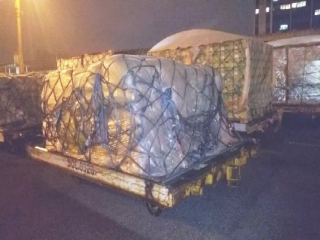
How to solve the shortage of Brazilian coffee export containers? Coffee companies spend billions to fly coffee beans
Up to now, the global container shipping crisis has not been effectively alleviated. Shipping vessels and containers are mainly concentrated in the United States, Asia and Europe, and are the main export ports. According to a report compiled by the South American Overseas Chinese News Network, one of Brazil's coffee producers had to complain because of the insufficient number of containers in Brazilian ports.

Ethiopian coffee varieties with wine-like sour taste introduce boutique coffee beans
In Ethiopia, the grading and quality control system of coffee is divided into three levels: producer, regional and national. All coffee is inspected by local inspection agencies before leaving the country of origin, and then re-tested at the coffee inspection and grading centers in Addis and Diredawa to determine its quality grade. Coffee is graded before auction and sale, for all involved in production, acquisition,

Introduction to El Salvador Mercedes Coffee Bean Flavor description Manor by Grinding scale treatment
El Salvador Mercedes coffee bean grinding scale method Flavor description Manor said the government imposed an additional 15% tariff on exported coffee in 1986, that is, an additional 15% in addition to the existing 30% tax. Taxes, together with unfavorable exchange rates, have greatly reduced the export of coffee and the quality of coffee. The government finally realized the great role of coffee in the national economy, such as solving

Ethiopian boutique coffee beans planting situation, geographical location, climate, altitude
Ethiopian people are addicted to coffee. In 2003, domestic consumption accounted for 42.3% of the total output, with a per capita consumption of 3 kg. But more than half of the coffee produced each year is used for export to earn foreign exchange. The main exporters include the United States, Italy, the United Kingdom, Sweden, Norway, Greece, France, Belgium, Germany and Australia. Before 1974, the right to produce, process and trade coffee
Ethiopian coffee beans Mocha coffee beans
Ethiopia (Ethiopia) is one of the major producers of Arabica coffee beans in Africa and produces the best Arabica mocha beans in the world. It is said that coffee beans were first discovered by shepherds in the Kafa region of Ethiopia, and the name of coffee evolved from Kafa, so Ethiopia is still the hometown of coffee. Production and processing of coffee beans Ethiopia
Coffee beans introduce Ethiopian (mocha) coffee beans
Ethiopia (Ethiopia) is one of the major producers of Arab coffee beans in Africa, producing the best Arab mocha beans in the world. It is said that coffee beans were first discovered by shepherds in the Kafa region of Ethiopia, and the name of coffee evolved from Kafa, so Ethiopia is still the hometown of coffee. Production and processing of coffee beans in Ethiopia